
Africa
Life slowly returns to Port-au-Prince area after Haiti drives gangs out

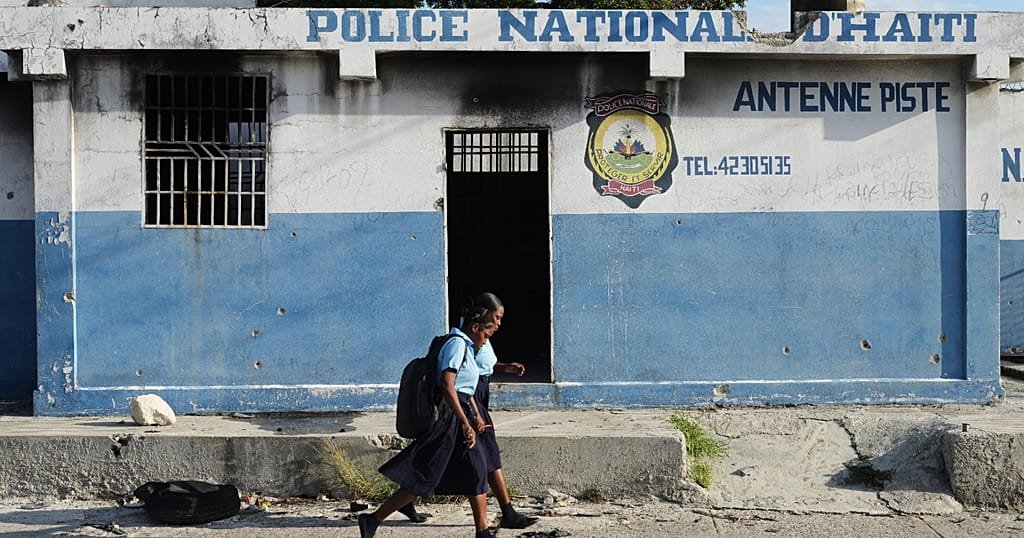
Glimmers of life appear in Port-au-Prince after Haiti retakes control of a key area from powerful gangs.
It is still quiet in Carrefour-Aéroport, a famed intersection in Haiti’s capital that once bustled with traffic and commerce until hundreds of gang members stormed the area in early March 2024 in an unprecedented wave of violence.
They smashed businesses, killed civilians and set fire to a police substation as officers fled.
For nearly two years after the attack, Carrefour-Aéroport was a dead zone.
Then in December, Haitian police officers launched a sustained attack against powerful gangs to drive them out of the area with the help of a private security firm and Kenyan policemen leading a United Nations-backed mission that is winding down.
The retaking of Carrefour-Aéroport is “probably one of the very first tangible messages sent by the authorities that, ‘yes, we can take back the territory of…no man’s land,’” said Romain Le Cour, head of the Haiti Observatory at the Global Initiative Against Transnational Organized Crime.
It’s a hint of what could happen elsewhere in Port-au-Prince after a powerful gang federation known as Viv Ansanm began raiding neighbourhoods and targeting key government infrastructure in February 2024 in a series of attacks that forced the closure of the country’s main international airport and eventually led to the resignation of former Prime Minister Ariel Henry.
On February 7, Haitian authorities reopened a renovated police substation in Carrefour-Aéroport to much fanfare in a capital that is 90 percent controlled by gangs.
Armoured police vehicles and heavily armed police officers patrol the streets.
Since the reopening of the police station , street vendors and the drivers of colorful buses known as tap taps have reinserted themselves in the area.
“Small businesses are recovering,” said Jean-Remy Laveau, a 35-year-old motorcycle taxi driver who used to work in the area before gangs seized control.
Carrefour Aéroport resident Pierre Jean Etienne said he still doesn’t feel safe but can no longer stand being in the displaced camps. “We want to go on with our lives and give our children food. We’ve stayed in the camps for too long,” said Etienne.
Deristy Jean sells second-hand clothes on the sidewalk. Around her, nothing has been rebuilt except for the police station. Dozens of charred homes remain in ruins while businesses and schools are still shuttered.
“We’re waiting for other merchants to come in the same way we did, taking risks ourselves. They have to try, and then life will return.” Said Jean
In its heyday, Carrefour-Aéroport attracted thousands of people a day. It was known for its street vendors, its stores that sold car parts, and restaurants that offered coffee to morning commuters and a local soup known as bouillon for lunch.
The most common crime was pickpocketing; killings were rare.
The people of Port-au-Prince are closely watching the situation in Carrefour Aéroport, hoping that security could spread to other parts of the capital