
Africa
Tunisia repatriates nearly 100 sub-Saharan migrants in ‘voluntary return’

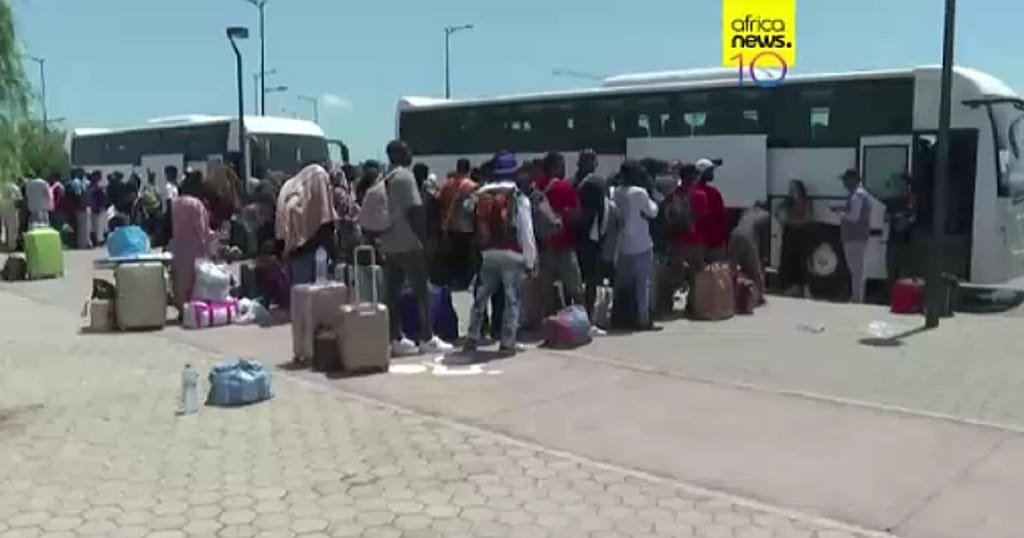
Tunisian authorities repatriated nearly a hundred migrants from sub-Saharan Africa on Tuesday under a so-called “voluntary return” initiative that has involved almost 5,000 people over the past year, Tunisia’s national guard said.
With their backpacks and suitcases, dozens of individuals — mostly young men, their faces covered in black masks, alongside a number of women and children — were photographed by AFP at the Tunis-Carthage airport.
A total of 91 irregular migrants left Tuesday, headed to multiple sub-Saharan countries, national guard spokesman Houcem Eddine Jebabli told AFP, lauding the strength of a programme launched last July.
He said the government initiative “takes into account humanitarian and social aspects alongside judicial and security constraints”, adding that “so far close to 5,000 people” have participated in the programme.
The rate of returns has intensified recently, with flights increasing in frequency from once a month to “near-daily dedicated flights”, Jebabli added. The initiative is separate from the International Organization for Migration’s own voluntary return scheme, which Jebabli said “secured the return of 27,000 people in three years”.
Under the government initiative, a campaign has been launched to encourage migrants to come forward “via a toll-free number or the numbers of officials at the voluntary return camp”, Jebabli said. AFP was not able to speak with the departing migrants on Tuesday, but humanitarian sources have recently denounced a campaign of arbitrary arrests of migrants who have been taken into buses to unknown locations.
According to Jebabli, the voluntary return camp in question, where the migrants’ identities are verified, is situated north of Tunisia’s second city of Sfax. Rights groups had in 2023 reported that an estimated 25,000 migrants had gathered in camps in that region under poor, unsanitary conditions after they were driven out of major cities.
In February of that year, President Kais Saied said “hordes of illegal sub-Saharan migrants” posed a demographic threat to the Arab-majority country. Saied’s speech triggered a series of racially motivated attacks as thousands of sub-Saharan African migrants in Tunisia were pushed out of their homes and jobs.
Alongside neighbouring Libya, Tunisia had been a key departure point for migrants seeking to make the perilous journey across the Mediterranean in search of better lives in Europe. Amid efforts to curb arrivals to its southern shores, the European Union signed a 255-million-euro ($300 million) deal with Tunis in the summer of 2023.