
Lifestyle
Stars hit Paris runways, but fall’s real trend was dressing for hard times — and real life

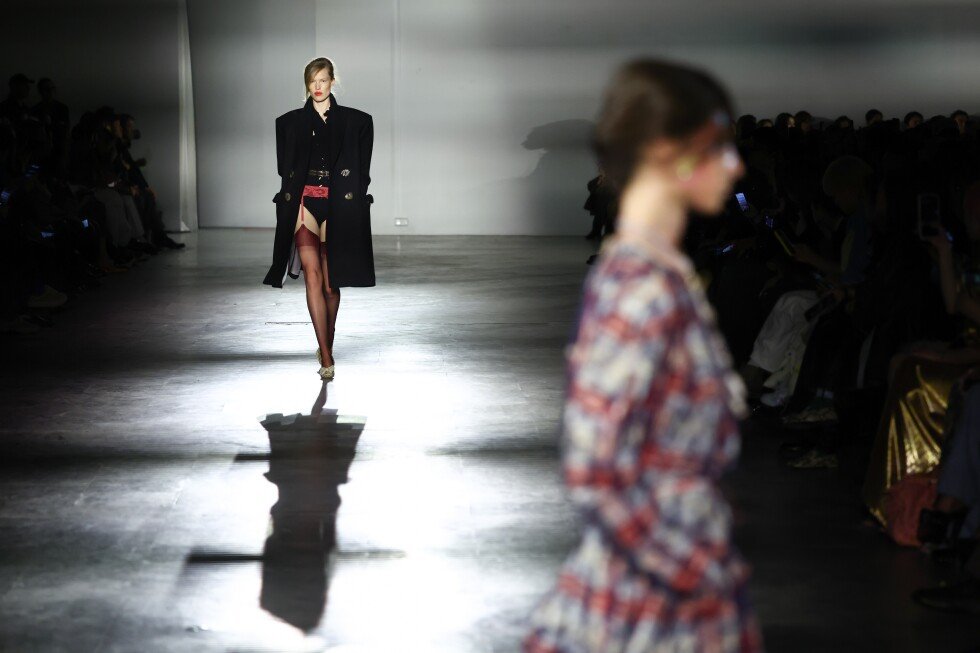
PARIS (AP) — The celebrities came first, as they always do at the Paris runways.
After Oprah Winfrey stole the show in the opening stretch of the nine-day week, Naomi Watts and Kai Schreiber were at Balenciaga. Rooney Mara, Diane Kruger, Alexa Chung, Elizabeth Olsen and Yseult turned up at Givenchy.
Sarah Paulson and Tracee Ellis Ross watched Celine. Chappell Roan was at Vivienne Westwood and then at McQueen, where Myha’la and Sophie Thatcher were also there. Chanel was still to come Monday, and Louis Vuitton capping the season Tuesday.
But this week was about more than the front row.
Paris Fashion Week ’s biggest houses are in reset mode, and the designers leading them are trying to answer the same hard question: How do you dress people when the world feels dark, loud and unstable?
Three trends stood out
First came clothes built to shield: high collars, wrapped coats and strong tailoring.
Then came the silhouette: a sharper line, as designers moved away from years of oversized dressing and back toward shape.
The third trend was glamour that looked less polished. Hair was messier, makeup was smudged, clothes felt rougher and the mood was darker. Luxury no longer looked sealed off from real life.
Armor for anxious times
Balenciaga led the first trend.
In his second show, Pierpaolo Piccioli built the collection around darkness and the search for light, working with “Euphoria” creator Sam Levinson on a set tied to the series’ return.
The mood pushed the collection toward unease.
On the runway, that became balloon bombers, cocoon backs, portrait collars and face-framing necklines that made the body look guarded.
Even the softer draped dresses kept that mood: these were clothes for a hard world.
Givenchy pursued a similar path and made it more personal. Sarah Burton’s third show felt like the one where her point of view clicked.
She was not proposing one ideal woman, but many women and many ways of being strong, with exact tailoring, strong coats, peplum hips, velvet, shearling and evening looks grounded in real life.
Burton’s collection was about how women put themselves back together in the world they are living in. That idea gave the clothes force. They were polished, but but still connected to it.
Junya Watanabe pushed the idea furthest, turning gloves, motorcycle gear and emergency blankets into couture-like forms.
McQueen did the same, with Seán McGirr talking about paranoia, perfection and the strain of always being seen. His slashed leather trousers, low-slung minis and chainmail-like textures suggested exposure, but also defense.
The new sharpness
The second big trend was silhouette.
After years of volume, slouch and oversized ease, Paris is moving back toward the body.
Celine made that shift most clearly. Michael Rider’s third outing felt like a designer settling into his idea.
He wanted clothes for living in. His coats and suits sat closer to the torso. His trousers kicked out in cropped flares. His menswear came in long, narrow overcoats that looked crisp rather than inflated.
Rider also suggested that the long dominance of oversized dressing may be breaking.
His version of sharpness was not stiff or nostalgic. It had ease, but it also had character.
Classic clothes came back with a little edge: smaller details, stranger proportions, a more exact line.
That made Celine a clear mood-setter.
Paris runways were after presence, just no longer through sheer size.
You could see that shift elsewhere, too. Burton relaxed the strict hourglass she established earlier at Givenchy, but she did not give up shape.
Piccioli used collars and cocoon backs to frame the figure rather than bury it. McQueen’s low-rise minis and neat boots pointed the same way.
The season’s line was stronger, cleaner and closer to the body. After years of volume, Paris was asking for something more exposed. Stand up. Be seen. Take shape.
Beauty with the cracks left in
The third trend was less polished glamour.
Designers still wanted beauty, but they wanted friction too.
At Westwood, Andreas Kronthaler staged grief, eroticism and disorder at once, speaking openly about loss while insisting on pleasure and play. On the runway, that became rough seams, smudged lipstick, lingerie codes, odd hats and an unfinished bride. It looked messy, sad, sexy and alive.
That appetite for imperfection ran through the week.
Rider evoked the messier inner lives beneath beautiful clothes.
Piccioli used shadow to keep darkness close.
Burton filled Givenchy with distinct female characters instead of one polished ideal.
Paris repeatedly rejected sterile luxury. Taken together, the strongest shows suggested a week less interested in escape than in resilience. The best designers were not trying to make the world disappear.
They were trying to arm women for it.