
Africa
Mali’s military government says militants have staged attacks at several locations

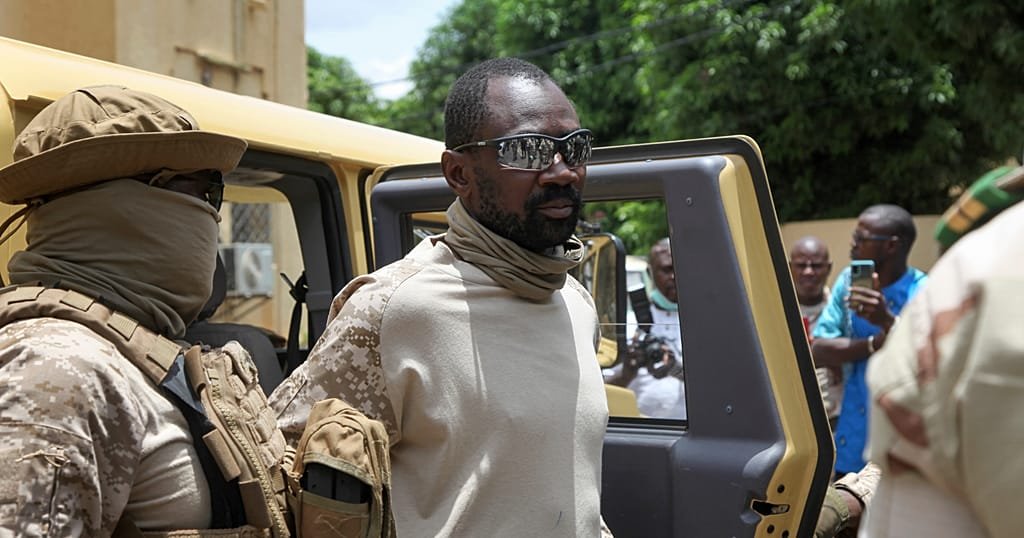
Mali’s junta says that armed militants have staged simultaneous and coordinated attacks at several locations across the country involving multiple groups.
On Saturday morning, the army said it was fighting what it described as “terrorists” that had attacked the main army barracks in Bamako and other areas.
Explosions and sustained gunfire were heard across the city including near the main military base in Kati just outside the capital.
The town is the home of the country’s military ruler, General Assimi Goïta, who first seized power when the army overthrew President Ibrahim Boubacar in August 2020.
Military officials said fighting was ongoing and asked citizens to remain calm.
No-one has claimed responsibility for the attacks.
Mali has been battling insurgencies by the West Africa affiliates of al-Qaeda and Islamic State for more than a decade.
But it has been grappling for much longer than that with a Tuareg-led rebellion in the north of the country.
Military leaders took power in Mali after coups in 2020 and 2021.
They vowed to restore security in a country where militants control large areas of the north and centre and stage frequent attacks on the army and civilians.
The junta, like its counterparts in neighbouring Niger and Burkina Faso, has severed ties with former colonial ruler France and some Western countries, to move closer politically and militarily to Russia.
Russia’s Wagner Group, which had been fighting with Malian forces against jihadists since 2021, announced the end of its mission in June 2025, and has become the Africa Corps, an organisation under the direct control of the Russian defence ministry.
The military government has cracked down on critics and dissolved political parties.
It had pledged to hand over power to civilians by March 2024 but in July 2025, it granted Goïta a five-year presidential term, renewable “as many times as necessary” and without an election.
Since September, jihadists from an al-Qaeda affiliate known by its Arabic acronym JNIM, has been attacking fuel tanker convoys, bringing Bamako to a standstill at the height of the crisis in October.
Despite several months of calm, residents in the city faced a diesel shortage in March, with fuel prioritised for use in the energy sector.