
Africa
Kenya intensifies screening and awareness for truck drivers over Ebola fears

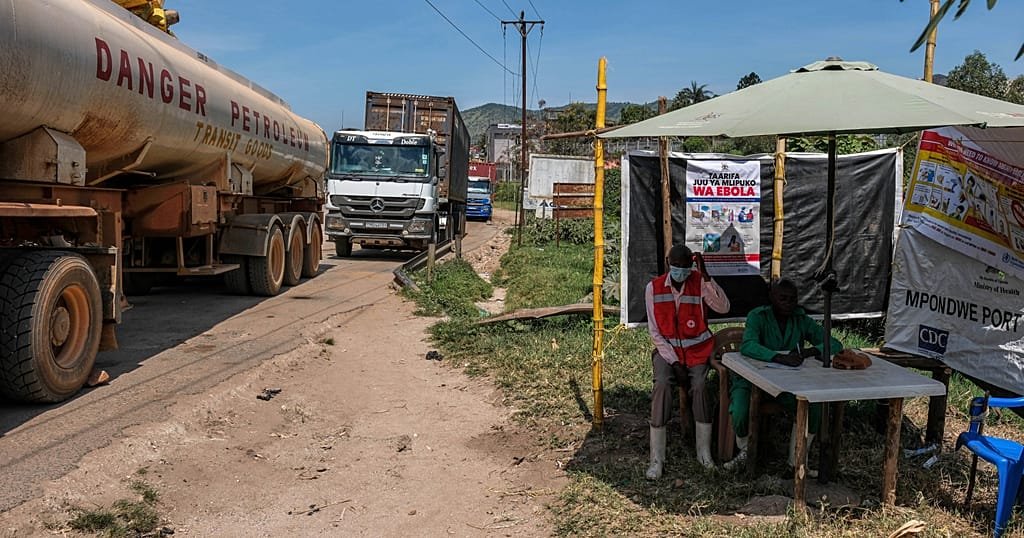
Kenya’s health authorities have intensified health screening for truck drivers whose movements span thousands of kilometres across multiple countries, as East Africa remains on heightened alert following the latest outbreak of Ebola in the Democratic Republic of the Congo.
Everyday, hundreds of trucks leave Kenya’s capital Nairobi carrying goods to Uganda, Rwanda, the Democratic Republic of the Congo (DRC) and South Sudan. But with East Africa on high alert over the Ebola outbreak in the DRC, they know they need to be careful.
“We no longer shake hands,” says driver Stephen Kihima. “We do fist bumps or just wave, but we don’t fear crossing borders because this is our job.”
The number of confirmed Ebola cases continues to rise but, so far, the outbreak has been largely contained in eastern Congo. That’s in part thanks to enhanced health screenings, temperature checks, and awareness campaigns at border points. For truck drivers, taking precautions is now part of their routine.
“Most of us drivers have stopped eating food in those countries, we move with our own stoves and cook our food, most of us don’t go to the hotels to eat,” Kihima says. “We fear that the hotels might have the disease.”
Truck drivers are a critical link in regional trade, but they’re also on the frontline of the outbreak. Their extensive movement creates opportunities for infectious diseases to spread. if proper measures are not followed. Protecting the drivers also helps protect their communities.
Samuel Njenga is an expert in infectious diseases:
“When truck drivers are well informed about how the disease is spread when they now go to those areas where maybe the disease, where there are cases of that disease of the Ebola virus disease they would also know how to stay safe; how to interact with the population there; they will know what preventive measures to take.”
Kenyan authorities have strengthened monitoring systems at key entry points and are working with regional partners to prevent cross-border transmission. The Ministry of Health says it’s going to start weekly briefings for drivers at the border and continue to provide health trainings.