
Africa
Xenophobia shatters Ghanaian entrepreneur’s dream in South Africa

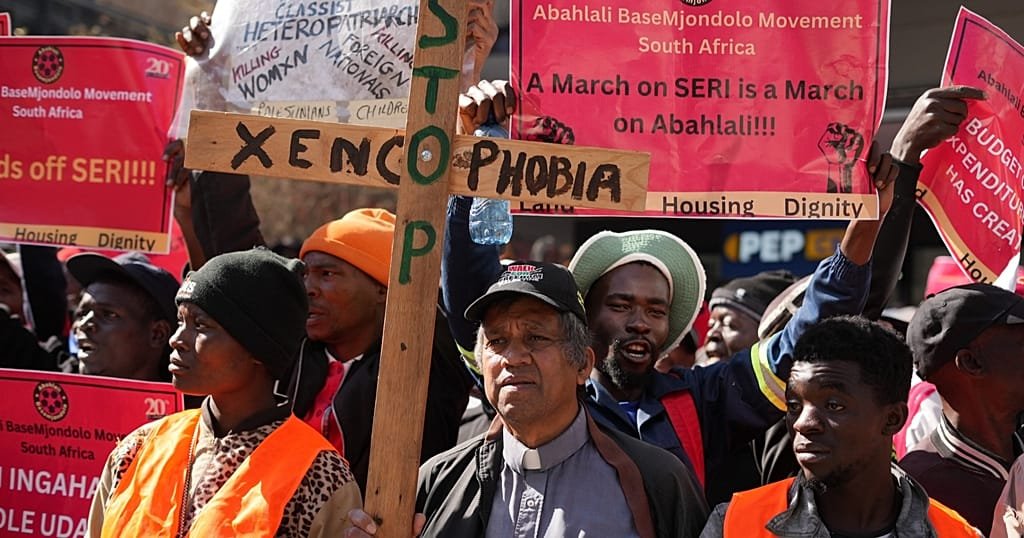
Ghanaian entrepreneur Emmanuel Akuoko returns home after xenophobia shatters his South African dream
Emmanuel Akuoko did not return to Ghana with the success he had promised his family. Instead, he came back carrying the bitter feeling of having been forced to dismantle more than a decade of his life in just a few days.
Last Monday, the Ghanaian entrepreneur left South Africa on a repatriation flight organised by his country’s authorities. He had built his life there after arriving in 2014, following a mathematics degree from Ghana’s Kwame Nkrumah University of Science and Technology. Like many others, he followed colleagues who had moved to South Africa, drawn by professional opportunities and the country’s reported demand for mathematics teachers.
But his journey gradually collided with administrative obstacles and a growing hostile climate toward African migrants.
In 2018, Akuoko says he lost his legal immigration status while working in the public education sector. Unable to continue teaching, he turned to hairdressing and opened his own salon. He says South African authorities failed to renew the residency documents needed to continue his stay. According to other migrants’ accounts, this situation is not unique, with some Nigerian nationals also reporting prolonged difficulties renewing their immigration permits.
For Emmanuel, however, the breaking point was not just about paperwork. It was found in the streets, in people’s attitudes, in everyday conversations — even among children.
It was this everyday xenophobia, less visible than physical attacks but increasingly normalised, that convinced him he no longer had a place in South Africa.
“More and more often, when you walked around, a little child could simply ask you: ‘When are you going back to your country?’” he recalls. In his neighbourhood, he says, being foreign had become a permanent label.
The question, coming from a child, represented a deeper form of rejection for Emmanuel. It showed him that hostility was no longer limited to political groups or street protests, but was being absorbed into communities and passed down through generations.
His trauma was also fuelled by images of violence circulating among migrant communities. He recalls waking up to videos showing people he knew being beaten so severely they were barely recognisable, alongside calls for foreigners to leave the country.
As anti-immigrant campaigns intensified, members of the Ghanaian community became increasingly visible targets, he says. While xenophobia has long existed in South Africa, Emmanuel believes the situation has worsened significantly in recent years.
Anti-immigration groups have repeatedly blamed foreigners for unemployment, crime and economic difficulties. President Cyril Ramaphosa has rejected claims that migrants are responsible for South Africa’s social and economic challenges.
For Emmanuel, however, the political debate became a daily reality: fear of going outside, constant awareness of being seen as an outsider, and the feeling that violence could erupt at any moment.
When he learned that the Ghanaian government was offering its citizens a chance to return home, he decided to leave. The decision came quickly. His hair salon, built through years of hard work and reinvention, was sold for around $600 — far below what he believed it was worth. He also had to abandon a church he was building.
Behind the material losses was a broken promise to his family.
Emmanuel had left Ghana determined to succeed. He wanted to return home after building a stable future for himself and his loved ones. His sudden return was nothing like the one he had imagined.
“It hurts me. I never planned any of this. My wife and I never sat down and said: ‘Let’s go back to Ghana.’ We wanted to return after we had succeeded, just as we had promised our family.”