
Africa
Unpaid health workers strike as Congo’s Ebola contact tracing falls behind

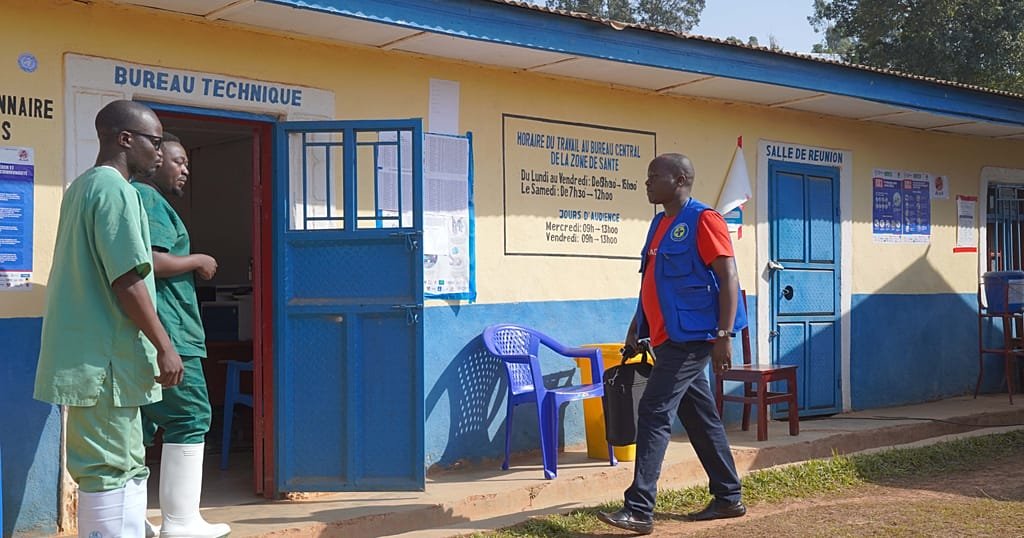
On Friday, as every day, community health worker and head of contact tracing in Nizi, Gédéon Banga Ngbape and his team fanned out across communities in eastern Congo looking for people who may have crossed paths with the country’s fastest-growing Ebola outbreak in history.
Gédéon Banga Ngbape said a challenge they are facing with right now is that health workers haven’t been paid in over three months.
“We’re also facing challenges related to the limited mobility of our field staff,” he added.
On Thursday, health workers at the Nizi Treatment Center went on strike and the facility temporarily closed.
Workers investigate dozens of alerts, search for those exposed to suspected or confirmed cases and try to get anyone showing symptoms into care before the virus spreads further.
But the surveillance system has been increasingly failing to keep pace with the virus.
Ngbape said that if surveillance does not work well, the entire response suffers.
Government data published overnight into Tuesday showed the outbreak has 4,381 confirmed cases, including 2,011 deaths. Starting from the first confirmed case, the death toll was reached almost three times faster than in the 2014-16 Ebola outbreak in West Africa, the worst on record.
The current outbreak was declared on May 15 but health authorities now say sequencing showed it began months earlier, in February.
In Nizi, Ngbape’s surveillance teams said they receive an average of 60 to 70 alerts a day.
Ana Ndroy Kasime, a community health worker in Nizi, said she visits homes to educate residents about Ebola and reports suspected cases to health officials. But she said workers like her lack basic protective supplies.
The current outbreak, caused by the rare Bundibugyo Ebola virus, was unfolding in some of the most challenging conditions imaginable.
There were no approved vaccines or treatments for the Bundibugyo virus, though trials have been underway.
Strikes by some unpaid health workers, threats by rebel groups, anger from long-traumatized communities and misinformation asserting that Ebola was not real have significantly hindered the response.