
Africa
Rwanda’s royal cattle pampered with poetry and music

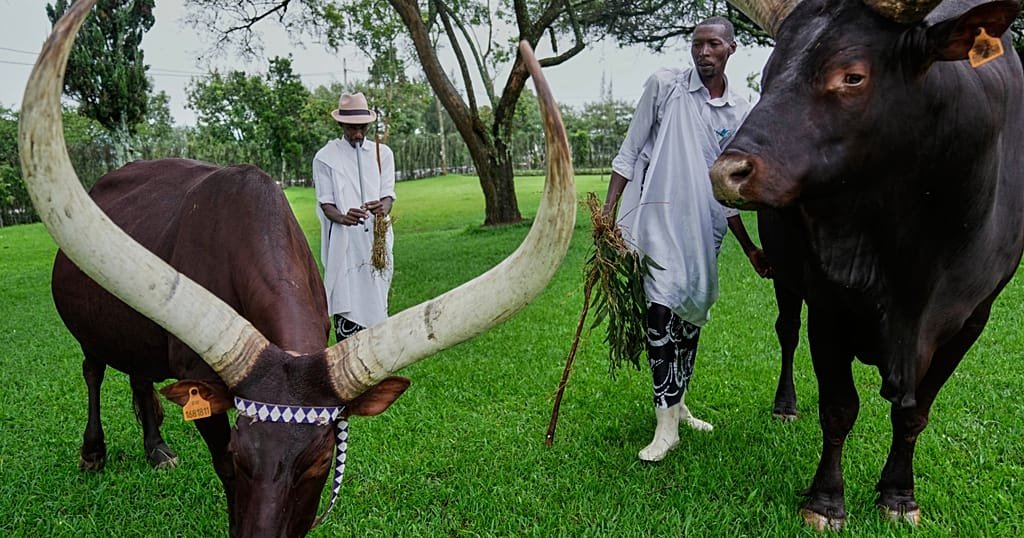
Pampered with music and poetry, it is a good life for Rwanda’s royal Inyambo cows grazing at the King’s Palace Museum in Nyanza.
With their distinctive long crescent-shaped horns, they have become living symbols of the nation’s cultural heritage.
Descended from the distinctive Ankole cattle of East Africa, they are also found in neighbouring Uganda and Burundi, and can be seen at the homes of some of Rwanda’s richest people, including President Paul Kagame.
The Inyambo have long been associated with nobility, raised in royal courts where they symbolised wealth, prestige and power.
“They’re not for milk, they’re not for meat. They were just used as decorations around the palaces,” said museum curator Bigira Junior.
The monarchy no longer exists in Rwanda. But as the country seeks more tourists, it is investing heavily in places like the King’s Palace Museum, the much pampered cows are the main attraction.
They are pampered with melodious poetry describing their beauty.
“You have beautiful horns. Move your head so that we can see your beautiful neck and body. You are the most beautiful cow among others,” the caretaker sings.
This is believed to calm the cows ahead of major events where they are presented to visitors or during traditional ceremonies.
The cows’ coats are also brushed by caretakers, another way of calming them.
“Remember, they would be loved and cherished and you can’t love something from afar. You have to get close to it,” said Junior.
The beauty of the Inyambo breed has also shaped the traditional dances of women in Rwanda.
“You will notice that the women tend to raise their arms a little bit wide. So, they are more or less mimicking the different shapes of the royal cows [horns],” said Junior.
So revered are the cows that a local newspaper, once described President Kagame’s practice of gifting them to fellow heads of state as “Inyambo diplomacy”.
The cows were reintroduced around the King’s Palace Museum in the early 2010s as part of a conservation initiative.