
Africa
Kenyan mothers die by the hundreds in childbirth as health care remains weak

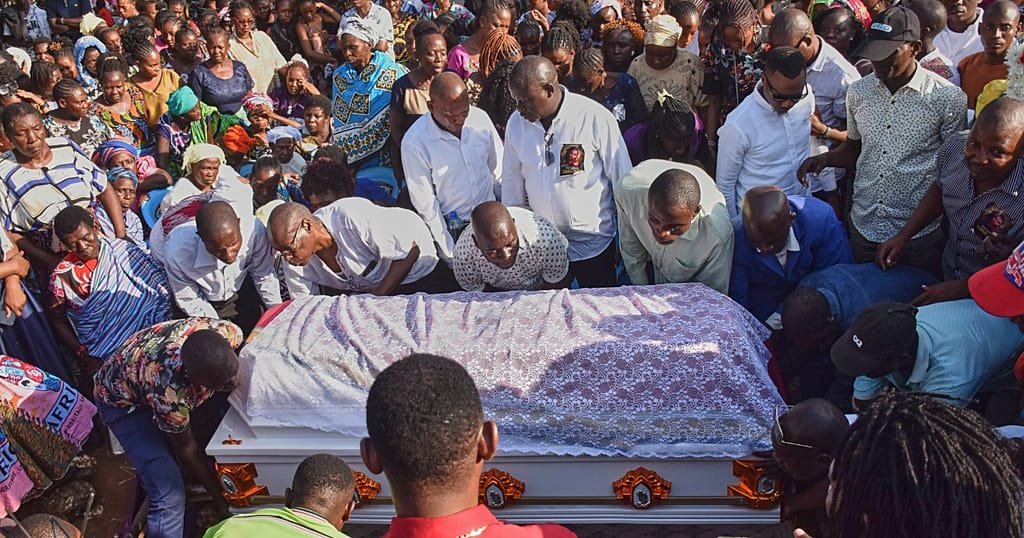
Penina Zawadi died after giving birth to her son. An hour after her daughter was taken into an operating room for a cesarean section Zawadi’s mother Esther Bendera was handed her newborn grandson. But her daughter did not return. Her family said she had been healthy but bled heavily during birth and and was sent to another hospital to have her uterus removed, a last-ditch measure.
She spent several days in intensive care before dying on June 23. She was buried on July 18, mourned by her family and friends. Nixon Charo, Zawadi’s father says: “We expected her (Zawadi) to safely give birth. But the circumstances she found herself in during labour led to her death. Penina (Zawadi) started bleeding instead of getting labour pains.
It was a Saturday night and she was taken to Malindi General Hospital. When she got there, the doctors saw she was in a bad state and decided to operate and deliver the baby.” Her family says Zawadi, who had been healthy in pregnancy, spent four hours bleeding at Malindi Hospital, waiting for the referral to the larger Kilifi County Referral Hospital, an hour’s drive on a potholed road.
Sub-Saharan Africa has the world’s fastest-growing population, but at the same time accounts for 70% of global maternal deaths. Around 180,000 pregnancy deaths are recorded every year across the continent. Kilifi County saw 532 mothers die for every 100,000 live births while the national average was 355 deaths, according to the latest government data in 2022.
Most deaths are caused by severe bleeding, obstructed labour, high blood pressure-linked conditions such as preeclampsia, and infections due to unsafe abortions, according to reproductive rights organizations. Esther Bendera, Zawadi’s Mother says: “She was bleeding so much, you would think it was water gushing out, she bled so much. The doctors did all their best, in futility and I saw there is nothing more they could do. So, they asked us to sign a document, consenting for another operation procedure to be done to examine Zawadi’s womb.
They said if they do not find where the problem is, they will have to remove the womb.” The deaths are also caused by shortages — of basic medical equipment in local clinics, of transport to better care, of information shared with pregnant women and their families. In June, the Kilifi County government said it had recorded 81 deaths in the last year and a half, which it called progress.
It pointed to recent changes such as increasing the number of healthcare facilities to bring services closer to mothers. And yet some local clinics are still just outposts among the mud-walled homes, often stocked with little more than painkillers and antacid medications.
Recent funding cuts by the Trump administration and other donors have deepened the challenges, especially for some of the poorest of Kenya’s poor. At a fundraiser held during Zawadi’s funeral to help offset expenses, most people could only contribute about a dollar each. Zawadi’s husband had been without a stable income and now must raise their sons with the community’s assistance.
Charo is urging the government to ensure that hospitals are well-equipped to handle complications during childbirth, and to not leave frantic families waiting for information. He points out that no-one was aware of how serious the complications were. Informal community health groups try to make up for the lack of clinics, professional medical consultations, and medicines.
They report that medical staff can lack motivation due to being underpaid and overworked and some view inquisitive patients as a bother. At the same time, some mothers fail to attend prenatal clinics where complications such as anaemia and hypertension can be detected. In most cases, pregnant women “arrive very late because some of the mothers are still ignorant and lack information on maternal health.
A local nongovernmental organization, Youth Voices and Action Initiative, is trying to educate women and girls through community forums and a podcast. Zawadi’s story resonates with many families in Kenya’s largely rural Kilifi County, where maternal mortality rates are far higher than the national average. The deaths occur in the shadows of the area’s thriving tourism industry for foreigners and locals along the Indian Ocean’s white sands.
Halima Ramadhan died in March while delivering twins, a week past her due date, and her family says they still don’t know what caused her death. The staff at Malindi Hospital recommended a caesarean section. An hour later, they presented Ramadhan’s mother-in-law, Mariam Kazungu, with the twins — a boy and a girl — and said their mother was in recovery.
Kazungu was then asked to buy medicine at a private pharmacy, with no explanation. During the three weeks that the 27-year-old Ramadhan was in intensive care, Kazungu said nurses kept asking her to buy more medicine, still with no word of Ramadhan’s condition. “I did not expect a big government hospital would lack medication to give administer to people who have undergone an operation.
Anyway, I said to myself that sometimes things can lack and it is okay to chip in. That was the first instance in Malindi whereby there was no medication and I went out to buy it myself. To my dismay, after being transferred to Kilifi, Kilifi hospital was even worse,” says Kazungu.
She grieves for her daughter and the grandchildren who will never have know their mother. Khatra Abdi, Director of Health at the Council of Governors says the Kenyan government is making progress in some areas, but she agrees that the situation is particularly dire in certain counties.
“Right now, as a country, we are not doing so well. Our figures are very high. We are at 355 per 100,000 life births. For 47 county governments, things are changing. We are doing so much in terms of intervention to reduce preventable maternal death. But as a country, we have 26 counties that have high burden of maternal and perinatal death.”
According to Abdi a programme is already a programme to ensure the nationwide distribution of the drug carbetocin which helps prevent excessive bleeding after childbirth. “My child left here (Malindi Hospital) and went there (Kilifi Hospital). She neither got help here, nor there.
So, if lack of medical equipment or lack of medication that would stop the bleeding is the problem, can they be brought to these hospitals and save people. Because, as at now, many of those who are going to give birth are dying in large numbers.
I can only ask the government to equip these place so others can be saved. Because I have already lost,” says Esther Bendera, Zawadi’s Mother. The Kilifi County government did not respond to questions about the deaths of Ramadhan and Zawadi or about the local maternal mortality rate.