
Africa
Guinea-Bissau’s military government defends postponement of elections

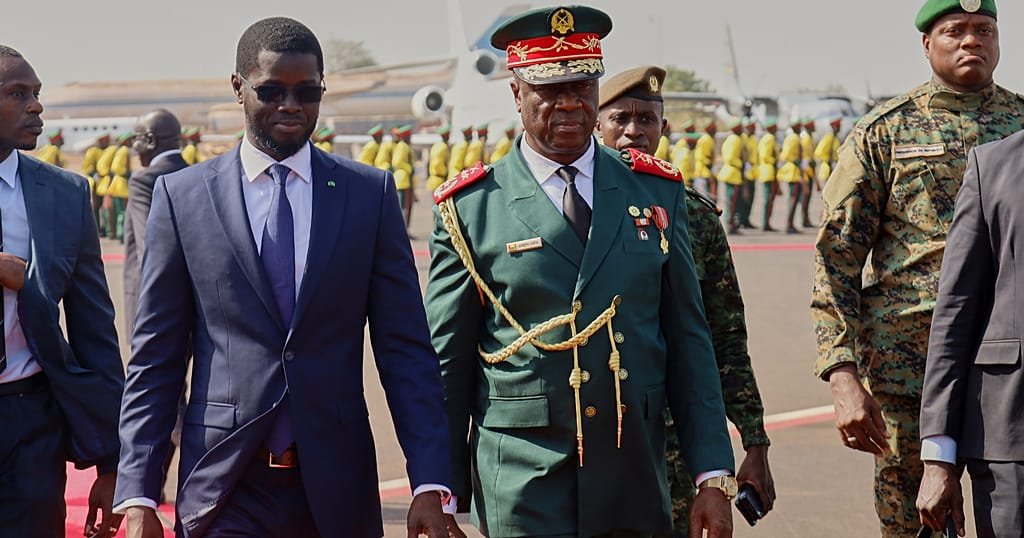
Guinea-Bissau has defended its decision to postpone next month’s planned presidential and legislative elections until 2028.
Its military leaders on Thursday said conditions were not in place to hold the polls and stick to the one-year transition to civilian rule promised after last year’s coup.
Transitional president, General Horta N’Tam, said government of the country has been assured at all levels in the current “special context”.
“Internationally, Guinea-Bissau has managed to preserve a good level of relations with its bilateral and multilateral partners,” he added.
N’Tam said the behaviour of Guineans over the period had been “marked by civility and respect for the authorities” and he hoped it would stay that way.
The presidency said an assessment of electoral preparations had found that there were insufficient “technical, material, and financial conditions” to organise a credible vote.
Regional bloc ECOWAS had called for a short, structured, and transparent transition back to civilian rule after the ousting of President Umaro Sissoco Embalo.
The elections will now be held on 26 November 2028, three years after the generals came to power.
N’Tam said there was a need to “institutionalise local authorities” by holding the country’s first-ever municipal elections, he added.
In an address to the nation Thursday evening on national television, N’Tam described the transition record to date as “positive”.
He said a nationwide electoral census would have to be carried out with new mapping drawn up “according to the new division of electoral constituencies, which will go from 29 to 12”.
N’Tam also said the number of members of parliament would be reduced from 102 to 65.
The reforms needed to address these challenges required more time and more resources than initially planned, he said.
The military coup on 26 November 2025 came on the eve of the scheduled announcement of provisional results for the presidential and legislative elections held three days earlier.
Incumbent president Umaro Sissoco Embalo was overthrown and the electoral process was suspended.
The military government held a constitutional referendum in August that replaced the semi-parliamentary structure with strengthened presidential powers. The opposition had called for a boycott of the vote.
Many observers suspected Embalo of orchestrating the 2025 coup to halt an election process he appeared to be losing.
However, the current leadership has more recently taken several steps suggesting it is distancing itself from the former president.
The Portuguese-speaking country has seen four previous coups and attempted coups since gaining independence from Lisbon in 1974.