
Africa
Chad opposition figure, Succes Masra, calls for reconciliation after his release

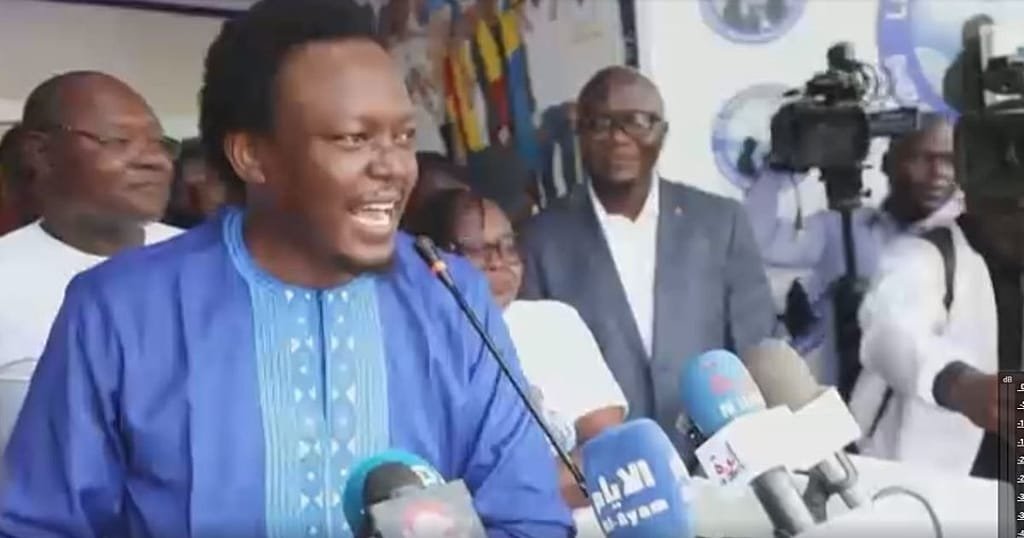
Chadian President Mahamat Idriss Deby on Friday pardoned jailed ex-prime minister and leader of the main opposition party Succes Masra and eight other opposition leaders.
Deby has led Chad since 2021 after taking charge of a military transition following the death of his father, who was killed by rebels after 30 years leading the central African country.
Masra, one of the president’s fiercest critics, was sentenced to 20 years in prison a year ago, convicted of hate speech, xenophobia and having incited a massacre.
The eight other party leaders all belonged to the Political Actors’ Consultation Group (GCAP), the main opposition coalition, which was dissolved by the Supreme Court in April.
They were jailed in May for eight years after being found guilty of inciting an insurrection.
The presidential pardon entails a “full remission of custodial sentences for the convicted”, according to a decree published on the presidency’s Facebook page.
“We thank the president of the republic for having braved the obstacles and chosen to move forward in the spirit of national unity that is now coming into being,” Ndolembai Sade Njesada, vice president of Masra’s The Transformers party, said.
“We hope at last to sit down around a table to move peace forward,” he added.
Like other opposition figures, Masra, 42, an economist, had fled Chad after the army and police opened fire on demonstrators protesting an extension of the political transition under the Deby-led ruling junta in October 2022.
Masra returned from exile and signed a reconciliation deal with Deby before being named prime minister five months ahead of the 2024 presidential election.
Deby was elected head of state with just over 60 percent of the vote, in a contested ballot boycotted by a majority of opposition parties.
Masra faced off against Deby in that vote, coming second with nearly a fifth of the vote, but claimed victory.
He was arrested in May 2025 and sentenced three months later to 20 years in prison, in what Human Rights Watch called a politically motivated trial.