
Africa
A full-blown industry’: Inside Nigeria’s kidnapping economy (Africanews Debates)

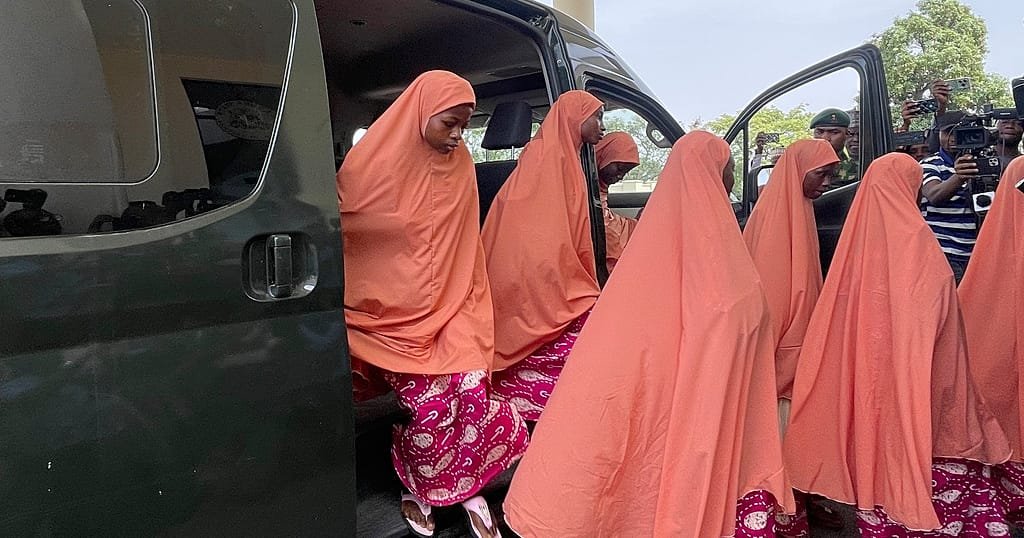
The story is no longer just about banditary. In Northern Nigeria, kidnapping has grown into a sophisticated, systematized corporate machine, an economy where human beings are the raw material and ransom is the currency.
That was the stark conclusion drawn by security and governance experts on the December episode of The Africanews Debates. The panel painted a picture of a crisis that has moved beyond random acts of violence to become a “financially integrated” industry, powered by weak state capacity and a vast network of profiteers.
The Cash Pipeline
At the centre of this crisis lies what many have desribed as a simple but brutal market force: supply and demand.
Experts argued that the flow of ransom money is the “raison d’être” of the trade. It has created a predictable cycle where the expectation of payment fuels the next abduction.
This isn’t just cash changing hands in a forest. The panel described a complex financial “echospace”, a sophisticated network of individuals who collect, move, and launder ransom payments through both formal banking channels and informal networks.
The human cost of this economy is devastating. Despite a 2022 amendment to Nigeria’s terrorism laws criminalizing ransom payments, desperate families continue to pay. The reason is a profound deficit of trust.
“Families pay because they do not believe the state can save their loved ones,” the panel noted.
In a twist that highlights the depth of the dysfunction, experts pointed out that security agents themselves have been reported advising families to negotiate directly with abductors, tacitly acknowledging their own inability to conduct safe rescues.
The Value Chain of Crime
To understand the resilience of kidnapping in Nigeria, one must look at the details. It is a multi-layered operation with a supply chain that rivals legitimate businesses.
The experts dismantled the myth of the “lone gunman.” Instead, they described an ecosystem involving community intermediaries (Informants living amongst the victims), logistics managers (The people supplying fuel, food, and repairing the motorbikes used in raids) and financial handlers (The “white-collar” criminals facilitating the money movement).
This web of actors creates a scenario where dismantling the trade is far more complex than simply arresting the gunmen. Every stage of the crime generates profit for someone, reinforcing the industry’s survival.
Economics of Desperation
Why is recruitment so easy? The answer, the experts argued, lies in Nigeria’s wallet.
Years of economic reforms, compounded by recent shocks like the removal of fuel subsidies and the devaluation of the naira, have pushed millions to the brink. In an environment of rampant inflation and unemployment, crime pays better than honest work.
Young men with access to firearms now view kidnapping not as an act of terror, but as a career path, often the only one available that promises a “living wage.”
A Crisis of Leadership
Ultimately, the debate circled back to a failure of governance. Critics accused Nigerian authorities of sending “mixed signals”, publicly banning ransom payments while allegedly negotiating releases behind closed doors.
The consensus was clear: the government has failed to disrupt the financial systems enabling the crime, failed to protect the families who fuel the demand, and failed to plug the recruitment pipeline fed by poverty.
The Way Forward
Is there a way out? The experts proposed a “multiple-point intervention.”
It requires a strategy that goes beyond boots on the ground. It means prosecuting the white-collar benefactors, creating safe alternatives for families so they aren’t forced to pay, and crucially, fixing the economic rot that makes kidnapping a viable job option for the youth.
As the panel concluded, Nigeria cannot cure this disease by treating the symptoms alone. To stop the kidnapping, it must dismantle the economy that keeps it alive.