
Africa
Moroccan men give traditional thanks to women for holy month cooking

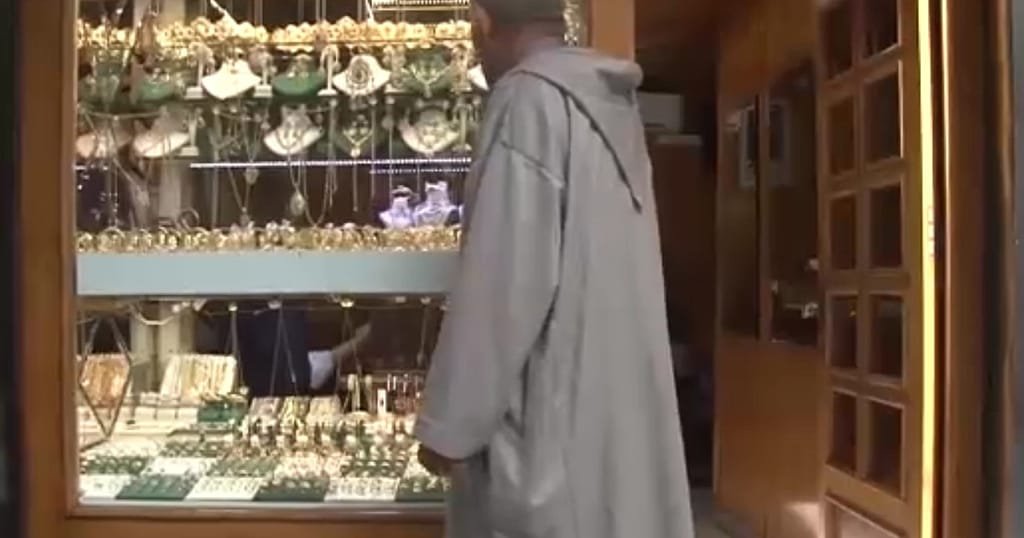
As Islam’s holy month of Ramadan draws to an end, in the alleyways of Rabat’s old city Hassan El Fezouati is in search of a special gift he can give to his wife at the feast of Eid.
Known as the “right of salt”, it’s an age-old tradition in the Maghreb showing gratitude to the women who have mainly been responsible for iftar, the meal breaking the daily fast.
The shops in the area come to life during this period.
Hassan, who is now retired, stands in front of several gold shop windows, admiring the displays of jewellery. Bracelets and rings may be considered as a suitable gift.
This tradition remains prevalent in many Moroccan families and is seen as a simple way to express gratitude.
“The right of salt is a recognition of the woman’s efforts during the month of Ramadan, considering the work and responsibilities she carries out at home, such as preparing the meals for iftar and suhoor,” he says.
“I try to preserve this tradition and encourage our children to continue it with their wives as well in the future.”
There are various stories as to why “salt” is referenced, but some say it represents a woman’s attention to ensuring dishes are properly seasoned despite not being able to taste them during the day.
The type of gift depends on one’s financial situation and personal taste.
“I used to buy my wife gold accessories most of the time, but now I am retired and my financial situation no longer allows me to do that,” he says.
But despite this, Hassan, still wants to surprise her with a gift.
“After visiting several shops, I decided to buy her a traditional outfit, especially since she once told me that she needed one,” he says.
As the sun sets on another day, Hassan’s wife serves one the many feasts she has made over the month to break the fast.
This includes harira soup, an essential element of Iftar in Morocco, and a diverse range of other dishes.
Preparing these meals takes time, especially as the Maghrib prayer approaches, when the family gathers around the table.
“From the moment I wake up, I am in the kitchen preparing the many and varied dishes. Because of this, we feel tired, as the effort is much greater during Ramadan,” says Batoul Ramzi.
After the meal is over, Hassan offers Batoul her his gift of a brightly coloured caftan which she tries on joyfully.
“The ‘right of salt’ gift, for me it represents appreciation and joy, whatever the type of gift may be. It does not have to be something big. Even a kind word can be enough. What matters most is the gesture,” she says.
In many families, this cherished tradition remains to acknowledge the effort made within the home during the month of Ramadan.