
Lifestyle
Beauty retail gets a makeover as shoppers seek product advice online

NEW YORK (AP) — It’s shoppers like Quinn Kelsey who keep department store executives up at night.
The 38-year-old Denver resident gets makeup ideas from TikTok videos and other social media content, not salespeople at beauty counters. She uses an AI chatbot to get product recommendations that fit her budget and to see how a certain foundation or lipstick would look on her. When she buys, it’s usually from Amazon.
“I use Chat GPT as my personal beauty consultant,” Kelsey said. “Department stores? I’ll walk through one for the decor, but they’ve basically lost me unless I can get the same product-research experience there that I can get scrolling through my phone at home.”
Once the ultimate beauty destination, department stores lost sales and their authority as skincare and makeup trendsetters starting in the late 1990s. That was when the growth of Sephora and Ulta Beauty made shopping for cosmetics more of a playful, self-service experience.
But fast-changing consumer preferences have all types of retailers racing to outdo each other for a slice of the $129 billion U.S. beauty and personal care market. The competition is fiercer than ever due to the ease of e-commerce. Amazon, which has slowly added premium beauty brands to its massive selection, is the nation’s largest online seller of beauty and personal care products, according to market research company Euromonitor International.
Social media also has provided new sources of beauty guidance. Instead of store advisers, many consumers look to videos by influencers, beauty brand founders or dermatologists for advice. Shoppers also turn to TikTok and Instagram for information about “dupes” — drugstore versions of more expensive products.
“Stores are more of the showroom, but the spark itself is happening in TikTok,” Jake Bjorseth, founder of the Generation Z advertising agency Trndsttrs, said.
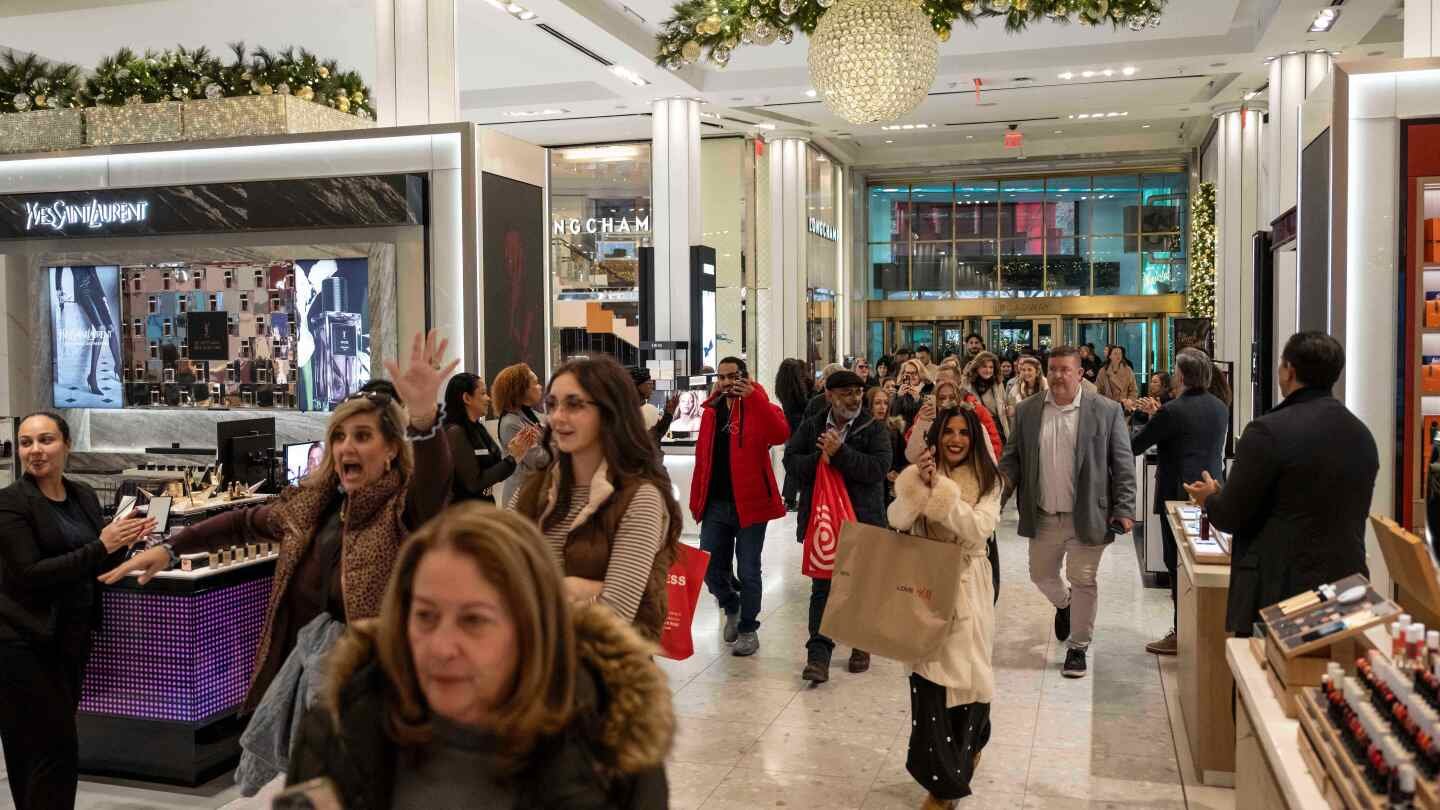
To keep up, companies with both physical and online stores are investing in upgrades that are meant to give beauty fans like Kelsey an experience they can’t get anywhere else. Macy’s and Nordstrom, for example, renovated the beauty floors of their flagship New York stores to add more space, ultra-luxury brands and cutting-edge technology. At Nordstrom, customers can book an appointment to get robot-applied eyelash extensions for $170.
The makeovers were launched in time for the holiday shopping season, which accounts for about one-quarter of all U.S. “prestige” beauty sales, according to market research firm Circana.
More reasons to linger
Department stores chasing beauty sales are introducing some of the serve-yourself features of Sephora — Nordstrom put in a “beauty bar” with brightly lit mirrors where customers are allowed to take makeup from different counters — while trying to distinguish themselves from specialty and online rivals.
Executives from Macy’s and Nordstrom said the latest changes were designed to create an engaging atmosphere that encourages shoppers to stay longer and spend more. The overhaul at Macy’s Herald Square included comfortable seating and skin analysis devices that help make the case for lotions and potions costing hundreds of dollars.
In the Parfums de Marly section, customers sample scents while wearing a virtual reality headset meant to immerse them in an 18th century chateau the French fragrance maker cites as its inspiration.
“This is the future of beauty,” Nicolette Bosco, Macy’s vice president of beauty, said, referring to the interactive technology the department store considers central to offering shoppers an elevated experience.
The company expects to redesign the beauty departments of 40 more stores. The facelifts are intended to draw shoppers of all ages, Macy’s Inc. CEO Tony Spring said.
“We’re trying very hard to take the idea of a department store and make it intimate and friendly and convenient,” he said.
Since becoming chief executive of the department store’s parent company last year, Spring has focused on reviving Macy’s by trying to attract the higher-spending customers who power sales at Bloomingdale’s and upscale beauty retailer Bluemercury, both of which Macy’s owns.
Nordstrom unwrapped the reimagined beauty floor of its midtown Manhattan store in September. It includes an area where shoppers can test beauty tools like LED light therapy masks and a “fragrance finder” machine that provide a dry whiff of up to 60 different scents.
Nordstrom also expanded the beauty treatments area at the New York flagship and a few other stores to include a medical spa that provides Botox and dermal filler injections that cost $575 to $1,050.
A closer look at the competition
Sephora redefined beauty buying by installing mirrors and disposable application tools near compact displays of both tester products and ready-to-grab goods. The DIY concept was a major contrast from department store counters staffed by beauty advisers who oversaw product sampling and retrieved fresh products from locked drawers.
But even innovators have to renovate. Sephora, a division of French luxury goods conglomerate LVMH, is in the process of updating its 720 stores in the U.S. and Canada.
The stations where customers get their hair and makeup done are getting moved to the side for more privacy. The chain, known for its long cash register lines, plans to expedite check-outs by equipping salespeople with devices that accept card and contactless payments.
Ulta, which stocks drugstore beauty brands like Maybelline as well as high-end brands, has had in-store hair salons since its founding in 1990. It’s adding ear piercing, testing robotic manicures and plans to add robotic lash extensions like Nordstrom’s to its service menu next year.
Walmart has moved into the turf of specialty retailers and department stores with products from higher-end and independent brands. The nation’s largest retailer put beauty counters this year in 100 stores where customers can try products.
Social media and the great beauty race
After working at a fashion event at Nordstrom’s Manhattan flagship, Ivan Leon, a 35-year-old freelance stylist, headed to the Tom Ford fragrance counter. He walked away an hour later having spent $537 on two bottles of perfume: a unisex scent named Bitter Peach and another named Vanilla Sex.
Leon planned to wear them together, a practice known as “fragrance layering” that he heard about on social media. The Nordstrom salesperson caught his interest by suggesting Tom Ford scents could be applied in tandem.
“It’s kind of cool when you combine two scents and it makes something new,” Leon said. “I think it helps the psyche and builds confidence.”
Leon, who typically buys his fragrances online, offers department stores hope but also represents the uphill climb they face given customers’ multidimensional shopping habits.
TikTok is not only spawning trends like “tired girl” makeup and “blurred skin” but becoming a place where users discover and buy from new brands. TikTok Shop, an e-commerce feature the social media platform launched in 2023, has emerged as the nation’s seventh-largest online seller of beauty and personal care items, right behind Target, according to Euromonitor.
The online market shares of Macy’s and Nordstrom are 1% and less than 0.5%, and declining, the market research firm said.
Amazon, which accounts for almost half of online beauty and personal care sales, aims to mimic the physical store experience with virtual makeup try-on tools like one Sephora introduced in 2016. Sephora, meanwhile, unveiled in March an AI-powered online tool that uses selfies to identify potential skin concerns and make product recommendations.